
Do you need a permit for a porta potty in South San Francisco?
If the unit sits entirely on private property, on a driveway, yard or a fenced construction lot, most jobs move forward with no city paperwork. The gray area is the curb strip, the sidewalk and the street. Placement in the public right of way needs confirming with the city before delivery, since South San Francisco has not published a blanket rule we can point you to here. This matters just as much for a temporary fence rental staged along a lot line as it does for the toilet itself. We ask every customer two questions before we quote: whose property is it, and is anything crossing the sidewalk. That single conversation avoids most delivery-day surprises. If you are planning a construction site services setup with multiple units, get the placement confirmed early, because moving a full tank after delivery costs more than getting the spot right the first time. Our porta potty placement guide covers ground clearance and access questions that come up alongside the permit question.
What about dumpster permit rules on the street?
A permit for a dumpster on the street is a different animal than a driveway placement, and cities generally treat curb and lane obstructions as a right-of-way issue rather than a waste issue. A roll-off dumpster rental parked on private pavement, like a contractor's lot or a homeowner's driveway, typically needs nothing from the city. Put that same 10 yard dumpster rental or 20 yard dumpster rental on the street in front of the house, and you're now occupying a public lane, which is the kind of placement that needs confirming locally rather than assumed. We see this question phrased as "jersey city dumpster permit" and "delaware porta potty rental" in searches from customers who moved here and are used to a different city's process; South San Francisco's own rules are not the same as either, and we do not guess. Check our dumpster permit requirements page before you commit to a curb spot, and review dumpster weight limits so the hauler isn't turned away over tonnage instead of placement.
How does placement affect access and delivery?
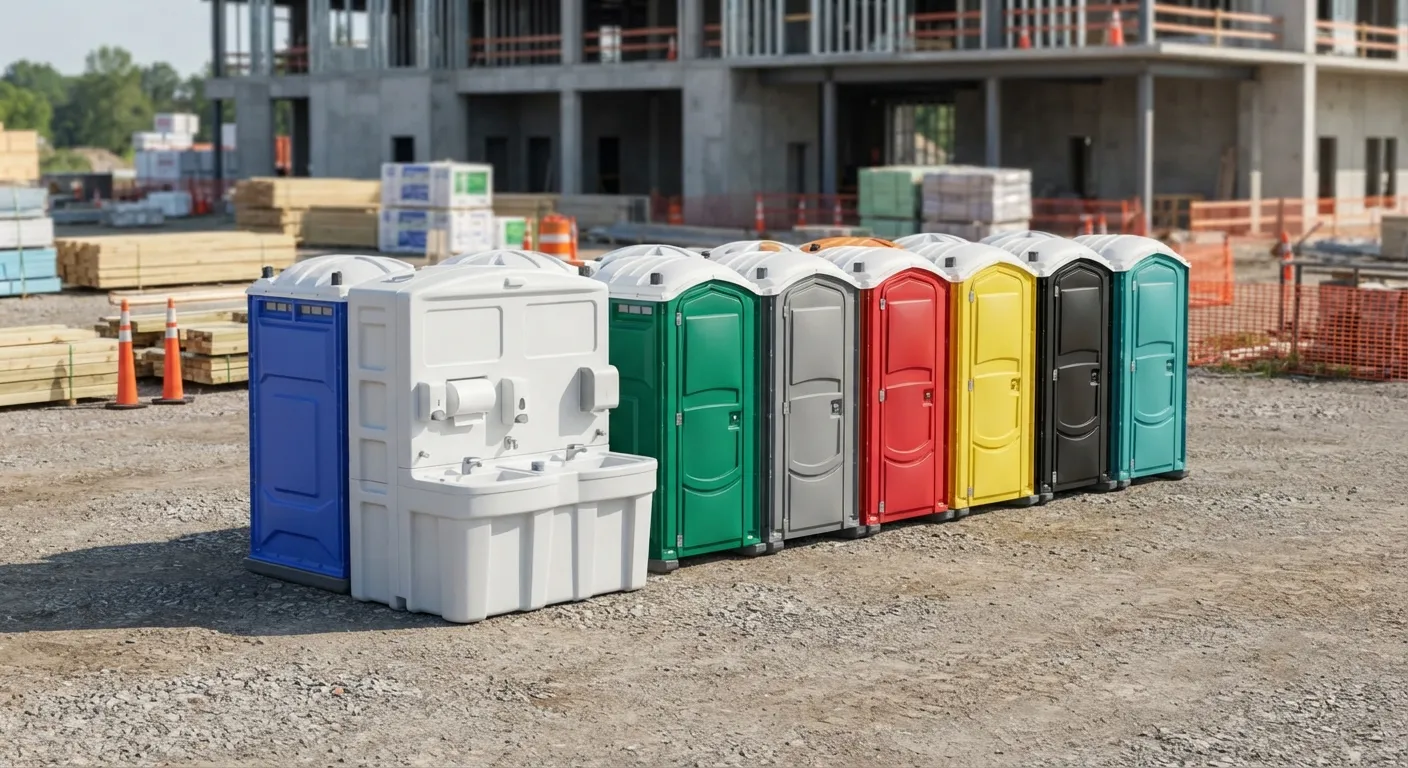
Placement rules exist partly because delivery trucks need room to work. A roll-off delivery needs about 60 feet of straight clearance behind the truck to set the box down safely, and a standard portable unit runs about 44 by 48 inches on the ground and stands roughly 92 inches tall, so tight side yards and narrow gates matter more than people expect. If you're renting a storage container rental or a 40ft storage container alongside your toilets, plan the same clearance for that truck. ADA-compliant placement adds another layer: ADA Standards section 403.5.1 calls for a 36 inch clear route to the unit, and section 405.2 caps ramp slope at 1:12 if the ground isn't flat. Our ADA accessible porta potty units are built around those numbers. None of this is a South San Francisco-specific ordinance, it's the physical reality of the equipment, and it applies whether you're 5.5 miles away in San Bruno or working a lot right here in the city.
Are there OSHA rules for portable toilet rules and regulations on job sites?
Yes, OSHA sets toilet counts by crew size, separate from any city permit question. OSHA 1926.51(c) requires 1 toilet for 20 or fewer workers, adding a toilet seat and urinal per 40 workers as crews grow past that, and per 50 workers once a site hits 200 or more. That's a federal labor standard, not a South San Francisco placement rule, so satisfying it doesn't automatically clear you for curb placement. Crews doing painting, coating or pesticide work also trigger OSHA 1926.51(f)(1), which requires washing facilities for that specific contaminant exposure. Pair your toilet count with a handwashing station rental or portable sink rental to cover both the crew-size rule and the contaminant rule at once. For help running the math on your crew, our how many porta potties do I need guide and OSHA portable toilet requirements page walk through it, and general sanitation duties also fall under 29 CFR 1910.141(d)(2) for soap and drying access at fixed job trailers.
| service | typical duration | price band |
|---|---|---|
| standard unit | day | $100 to $350 |
| standard unit | month | $125 to $325 |
| dumpster | week | $426 to $778 |
| temporary fence | day | $30 to $75 |
Renting for a longer stretch usually pencils out cheaper per day; check monthly porta potty rental and porta potty rental per day if you're comparing durations, and our porta potty rental cost page breaks the full range down further.
Does South San Francisco require a permit for a temporary power pole?
Temporary power pole permits typically run through the local building department because the pole ties into electrical service, separate from sanitation placement. If your site needs a temporary power pole alongside a light tower rental, confirm both with the city before delivery, since we don't publish electrical permit specifics we haven't verified.
Can I put a porta potty on the sidewalk?
Generally no, not without confirming right-of-way use with the city first. Sidewalks are public property, and blocking one raises the same access questions as blocking a lane. Keep units on private ground when possible, and check our porta potty placement guide for setback distances.
What happens if I skip the permit and place in the street anyway?
We can't say what enforcement looks like, since that's a city matter, not something South San Francisco Porta Pros controls. The safer move is a quick call to the city before delivery day. Our request a quote process includes that placement check.
Do event rentals need different permits than construction rentals?
Sometimes, since events often close streets or use public parks, which triggers different city review than a private construction lot. Check our event restroom rental and festival restroom rental pages, and confirm park or street closure permits separately with the city.
Is a permit needed for a storage container on a driveway?
Usually not, if it sits fully on private pavement. Our storage container rental cost page has pricing, but placement across the sidewalk or curb still needs the same city confirmation as a dumpster or toilet in that spot.
Next step
Get a delivery date
Tell us the address, the dates and the headcount. We size the order and confirm the route.