
What do we bring for an emergency response in South San Francisco?
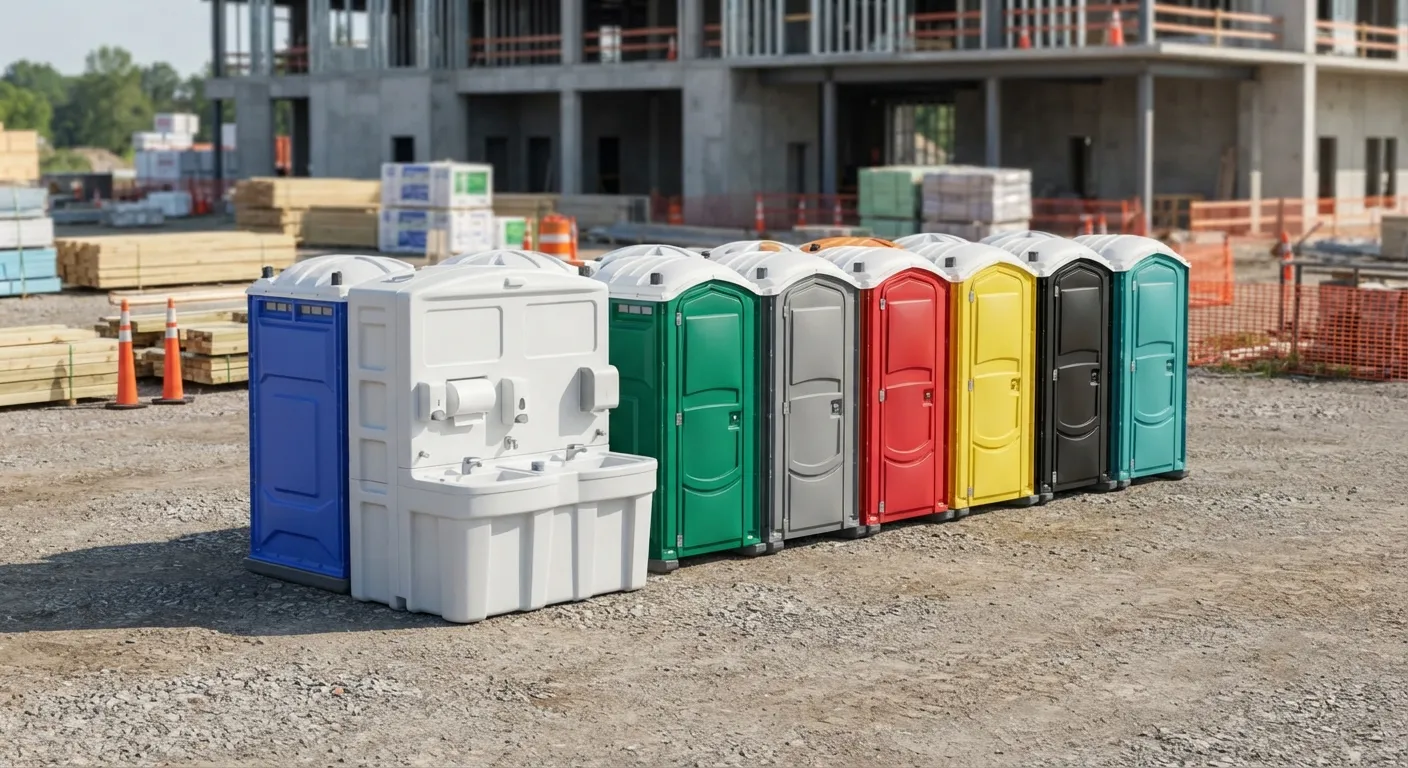
The kit depends on how many people need service and how long the disruption runs, but the backbone is the same three items every time: standard portable toilets, handwashing stations, and if the location has vehicle access problems, a temporary power pole or light tower to keep the site workable after dark. A standard unit runs a 60 to 70 gallon holding tank and stands about 92 inches tall, sized to handle a shelter population without daily servicing. For a shelter, a church basement, or a community center pressed into emergency use, we also send at least one ADA accessible unit; ADA Standards section 213.2 requires that where portable toilets are clustered, at least 5 percent be accessible, with a minimum of one no matter how small the cluster. If the disruption hits a neighborhood with older septic systems, we pair toilets with a holding tank rental so gray water and waste do not back up into a compromised leach field. San Bruno sits 5.5 miles southwest of South San Francisco, and Millbrae is 7.2 miles south, both close enough that we stage extra units there when a storm system is forecast to hit the whole peninsula, not just one city. We do not wait for a full damage assessment before rolling trucks. If your address is reachable, we deliver.
How fast can South San Francisco Porta Pros respond to a disaster?
Response time depends on road conditions and how many other calls are stacked ahead of yours, but staged inventory means we are not starting from zero. We keep a rotating stock of standard units, portable restrooms and handwashing stations ready for emergency porta potty rental dispatch, and we prioritize disaster response over routine construction site services work when a declared emergency is in progress. If you are coordinating relief for a shelter, a Red Cross site, or a multi-family building displaced by fire, treat this the same as any large event: use our how many porta potties do I need guide as a starting point, then call so we can confirm real numbers against the address. OSHA 1926.51(c) sets the toilet ratio used on active worksites, 1 facility per 20 workers, and it is a reasonable planning number for shelter populations too until local health officials issue different guidance. Burlingame is 7.6 miles south of South San Francisco and Pacifica sits 9.9 miles southwest; both distances matter if a first responder or a facilities manager is trying to estimate how long a truck will take to reach a satellite site outside the core city. We also carry temporary fencing for cordoning off unstable structures or restricted zones, delivered at the same time as sanitation equipment so a site does not need a second call and a second wait.
Do disaster relief sites need handwashing separate from toilets?
Yes. Toilets and handwashing are two different requirements, not one unit doing double duty, and shelter operators should plan for both from the start. 29 CFR 1910.141(d)(2) requires washing facilities to be stocked with soap and towels or a hand-drying device; hand sanitizer alone does not satisfy it. In a displacement scenario, where people are cooking, cleaning up flood debris, or handling contaminated material, a handwashing station or portable sink rental next to every restroom cluster cuts illness spread more than toilets alone ever will. If the debris cleanup involves paint, coatings or chemical residue, OSHA 1926.51(f)(1) requires washing facilities specifically for workers handling those contaminants, separate from general sanitation. For larger operations, a roll-off dumpster staged near the debris pile keeps damaged materials contained instead of scattered across the site, which matters when South San Francisco crews are trying to clear access roads. We size the response to the population, not a fixed package: a 12-person triage tent gets different equipment than a 200-bed shelter, and we walk through that math with whoever is running the site.
| service | typical use in disaster response | reference |
|---|---|---|
| standard toilet | shelters, cleanup crews, staging areas | OSHA 1926.51(c) |
| ADA unit | shelters with elderly or mobility-limited occupants | ADA Standards 213.2 |
| handwashing station | paired with every toilet cluster | 29 CFR 1910.141(d)(2) |
| holding tank | septic systems knocked offline | see holding tank rental |
| roll-off dumpster | debris and damaged material removal | see roll-off dumpster rental |
How much does emergency sanitation cost during a disaster?
Pricing follows normal day and weekend rates, there is no separate disaster surcharge on our end. A standard unit runs in the day-rate range you would pay for any short job; check porta potty rental cost or porta potty rental per day for current bands. Multi-day deployments often make more sense priced by the week.
Can you deliver to a shelter that does not have a formal address yet?
Yes, we work from cross streets, GPS coordinates, or a description of the site if a formal address has not been assigned. A roll-off delivery needs about 60 feet of straight clearance behind the truck, so tell our dispatcher what the access looks like before we load out.
Do you coordinate with city or county emergency management?
We work directly with whoever is running the site, including emergency management staff, shelter operators, or property managers. Call our contact page with the site details and we will match equipment to the population on the ground.
What if the disaster damages a septic system instead of just displacing people?
A residential septic tank is normally pumped every 3 to 5 years, but storm flooding or ground shift can force emergency pumping outside that schedule. See septic pumping service or call for emergency dispatch through emergency septic service.
How many toilets does a 100-person shelter need?
Using OSHA 1926.51(c) as a planning baseline, 100 people fall in the 20-and-up bracket requiring roughly 1 toilet and 1 urinal per 40 workers, so a shelter that size should plan for at least 3 units plus one ADA-accessible unit. Confirm exact numbers with our request a quote form.
Next step
Get a delivery date
Tell us the address, the dates and the headcount. We size the order and confirm the route.